

What does it mean to be mentally tough? You hear it all the time in the sports world, and it’s a trait that everyone says they want. Is it just a buzzword, or is it actually important? How do I attain it?
So let’s figure out together what it means to be mentally tough, why it matters, and how we can put it into practice.

If you do a quick Google search on ‘mental toughness,’ it will say:
“Mental toughness is a personality trait and psychological resource that determines an individual's ability to perform consistently under stress, pressure, and adversity, regardless of the circumstances. It is characterized by maintaining confidence, focus, and motivation to persevere through challenges, mistakes, and failures to achieve goals.”
I would say that’s pretty accurate. But what does this actually look like in practice? In my journey to professional baseball, I have learned through my own personal experience what ‘mental toughness’ actually looks.
It’s a lot deeper than just be confident or just be perseverant. We all like to believe we are mentally tough until real failure or adversity punches us in the mouth (figuratively).
So here’s a deep dive on mental toughness and fortitude from the perspective of a professional baseball player:
The 4 Pillars of Mental Toughness
Falling and getting back up. Undeterred by failure
Having faith that something greater has yet to come
Drowning out the noise and focusing on what matters
Being honest with yourself for the sake of self-improvement
If you embody all of these traits, you reach a state where are you are actually able to grow from failure, not simply just endure it. Let’s break it down:
Falling and getting back up. Undeterred by failure
Having a stomach for failure is far more difficult that people suggest. It is so much easier to just run away from our failures or just put them down and act like they don’t matter.
Let me tell you a story about failure:
February 2025, first game of the season, a disaster. My first weekend start as a college pitcher and I don’t even make it through the first inning. I’m sitting in the dugout distraught watching our team suffer a blowout loss thanks to me. My final year of college, transferring in hopes of making a name for myself, and I hear the voice in my head saying “am I cut out for this?”
For context, I had endured a lot of failure in my college baseball career, but I was still set on making a name for myself and eventually becoming a professional. So to be with a new team, in a new role, in my final year, starting off like this… it hurt.
But I didn’t listen to the voice in my head that was casting doubt. I got back up and kept going, and was able to have an incredible season.

The only reason I had the strength to stomach big losses like this and keep going was because I had a vision for my future success that I felt was inevitable. Which leads me into my next point…
Having faith that something greater has yet to come
What does ‘faith’ mean to you? To myself and many other Christians, it means a powerful, unwavering belief and trust in God. Even though we can’t see Him with our own eyes, we still believe matter how difficult our life gets.
Well faith is not a word that is exclusive to religion, so I would suggest it applies here too. For a long time I have had an unwavering belief that I could become a very successful baseball player. Regardless of how good or bad I was playing, the vision for my future success remained the same. Even when the evidence was not visible, I still believed I could do it.
I did a deeper dive on how to visualization here:

The problem is, if you have some grand vision or massive goal that seems so unattainable, many people will either suggest or tell you directly that it’s not possible. It’s not worth the pursuit. Even the voice in your own head will tell you this at times. That’s why this next pillar is so important:
Drowning out the noise and focusing on what matters
As I just mentioned, any worthwhile pursuit if always going to be cluttered with noise. Opinions, judgement, doubts from others or even your own mind, these are obstacles you will face.
The professional sports world is especially filled with noise, hence why having a strong filter is important. This is how you protect that original vision, goal, or dream you have for yourself.
Here’s a personal story about drowning out noise:
November 2025, I’m alone in my apartment, in a new city all by myself, training in hopes of signing a minor league contract with an MLB organization. The competition is fierce and the spots are limited. I’ve invested a lot in pursuit of this dream. People doubted whether I actually had a chance. As I’m laying on the floor in desperation, I hear the voices saying “am I cut out for this?”
Had I actually listened and believed what everyone else probably thought, well then I wouldn’t be in the position I am today.

But I will say: drowning out the noise does not mean to ignore all feedback. This leads into my last point…
Being honest with yourself for the sake of self-improvement
When I say ‘drown out the noise’ I’m talking about external forces that work against what your goals are. However, it is still very important to use objective feedback so you can learn from your failures and grow.
I’ll use baseball as an example. I ignore blanket statements that serve me no utility like ‘you’re not good enough.’
But if I have a bad game and my coach tells me, ‘you didn’t throw this pitch in the strike zone enough,’ thats objective feedback that leads to actionable advice. I can take that objective (not emotional) criticism and create a plan to develop my skills to improve that area of my game.
Don’t let others determine your own confidence, but don’t be so stubborn either to the point where you can’t learn anything. Have the mental fortitude to look at things objectively, not emotionally. Then you can find ways to improve your shortcomings rather than ignore them.
Things that help with mental toughness
I just outlined what I believe are 4 traits that I see in people who are ‘mentally tough.’ How can we actually improve these things? What should I do if I’m lacking in some of these areas?
Well, unfortunately I don’t have all the answers to that question, but I can tell you what works for me. Maybe you can take away something from my own experience.
I’m not going to give generic mental performance advice or offer up some type of ‘exercise’ since that’s not my area of expertise. I’m just going to share the things that bring me mental fortitude:
Putting God Above Everything
This is what we all like to think we do, but I will personally this is something that is far more difficult than it sounds.
How do I (try) to put God above everything? Seeking a relationship with him. Going to Mass and adoration often. Prayers of petition and gratitude. Thanking Him for everything. Trusting in him when I’m struggling. Praying about everything.
He has had a far greater impact on my ‘mental toughness’ than any direct mental performance training, but it’s so much bigger than that. It’s about the eternity of your soul. But that’s too deep of a topic to get into here.
You also might have noticed a lot of underlying Christian themes in the 4 pillars above:
Falling and getting back up
Unshakable faith
Drowning out the noise and focusing on what matters
Honesty and self-improvement
Healthy Lifestyle
How can you expect to be tough and resilient when you are not healthy?
I have noticed my lifestyle habits play such a massive role in how I’m feeling physically and mentally. If I’m eating bad food, not sleeping well, stressed, or stuck inside all the time, it becomes very difficult to think clearly. Energy tanks, and my mood suffers. You’re stacking the deck against you.
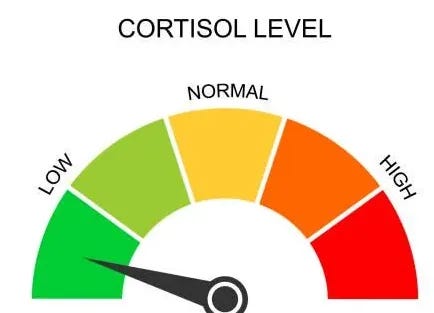
Sometimes the chaos of life gets in the way, but I try my best to always make sure I’m living as healthy of a lifestyle as I can manage. For the athletic performance benefits AND the mental benefits as well. I have enough challenges in life as is. I want my lifestyle choices to energize me, not weigh me down.
Being Social
This is a very unorthodox piece of advice, but something I have embraced lately that has had a profound impact on me.
Branch out of your bubble and talk to as many people as possible. Strike up conversation all the time. Sometimes when we get caught up in our own little world, we are getting influenced by the same people all the time. We try so hard to conform to our small little circle that it dampers who we truly are. We put way too much stock into what certain people think about us.
Most people are afraid to do this people they are afraid of bad interactions, or of awkwardness and the feelings that come with it. This is a subtle implication that you have a outcome-driven view of your own identity and way of life.
We put so much pressure on ourselves to conform, so not stand out too much, to avoid uncomfortable feelings. These things don’t align with mental toughness and fortitude. If you want to develop a stomach for failure this is the easiest place to start.
Plus, you just might make someone’s day or make some new friends.
Unusual advice, I know, but it’s something I’ve noticed lately.
Why Mental Toughness Matters
Suffering, struggle, failure, it’s all a part of life. Some endure far more than others. Mental strength, fortitude, toughness, whatever you want to call it, is about being able to transform our struggles into strength and grace for our own self-improvement. We then invite adversity and challenge to help transform us.
Whether your own struggle in life is physical, mental, spiritual, or all of the above, I hope you gained something from this article that you can take as actionable advice.
Whether you’re an athlete like me, or you’re pursuing something completely different, remember that one singular failure does not define you unless you allow it.
If you have any personal thoughts on mental toughness, comment below!
- MT